Heathlands
What is the Open Forest?
The Open Forest is defined by its rich mosaic of dry heath, wet heath, mires, bogs, and other wetland habitats, which, together, create one of the UK’s most diverse and ecologically valuable landscapes.
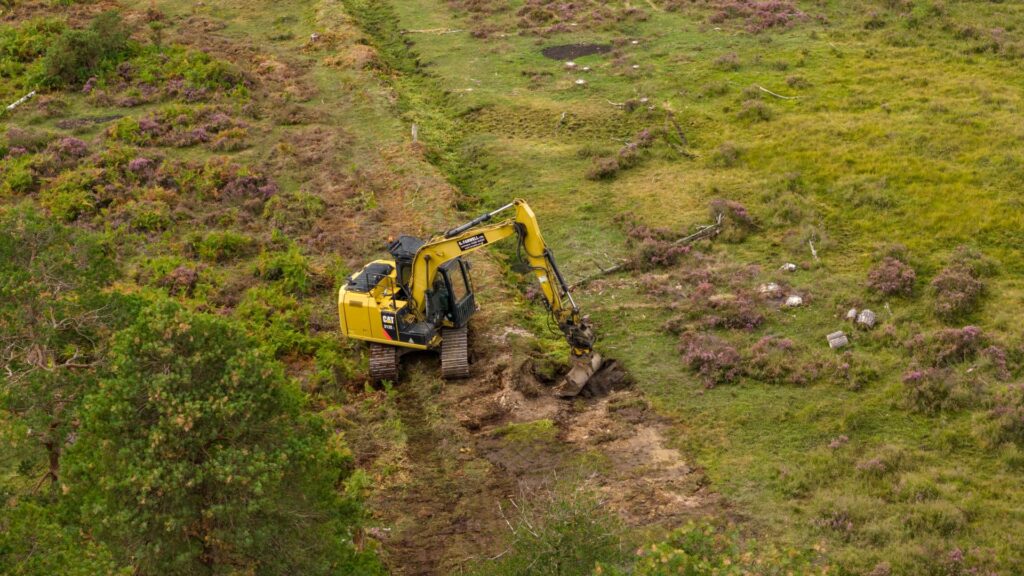
Open habitat restoration also involves infilling of forestry drains, to enable the hydrology of the site to return to its natural state, re-wetting previously dried up habitat.
Mires, bogs and wet grasslands are vital habitats for species, create natural flood management and contribute to the fight against climate change by storing large amounts of carbon.
Open habitat restoration
Restoring habitats involves removing non-native conifers and clearing encroaching scrub so that these areas can return to healthy heathland, once again providing habitat for some of the Forest’s rarest wildlife, supporting a richer variety of plant life, and improving grazing for New Forest Commoners’ ponies and cattle.
Through the HLS scheme, Forestry England is also helping to restore further open habitats after conifer plantations have been felled in the inclosures, in line with the latest Forest Plan for the inclosures.
This includes removing the ridges, furrows and stumps left behind from forestry plantations, making it easier to manage these areas in the future and helping the land return to functioning heathland.
By creating a more open and accessible landscape, this restoration also supports safer livestock management, especially during the yearly drifts in which Agisters and Commoners round up New Forest ponies to monitor their health.
What's the impact?
Recent survey work by Wild New Forest has shown just how quickly nature can rebound on restored sites.
The recovery was highlighted in a BBC article that described how more than 70 species – including 22 nationally uncommon or threatened species of birds, bats, insects and fungi – have returned to New Forests heathland far sooner than expected following restoration efforts.
This included Tiny Nail Fungus which only grows on the dung of ponies which have lived on a high fibre low nutrition diet.
Tiny Nail Fungus is found in only a handful of places in Great Britain, and the New Forest provides some of its most suitable habitat.
The area’s lowland heath offers the ideal conditions for it to thrive.