
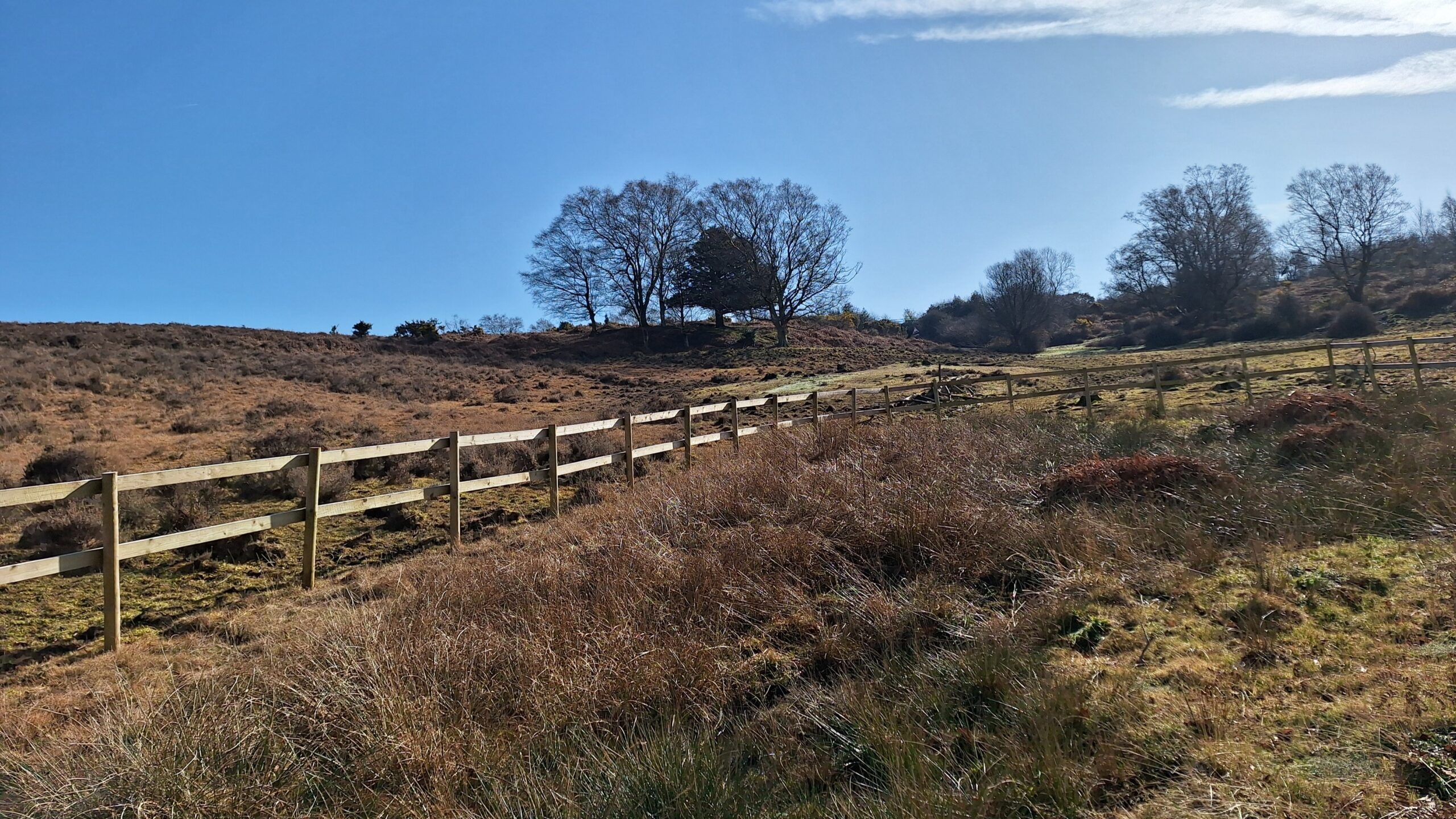
Picket Mire
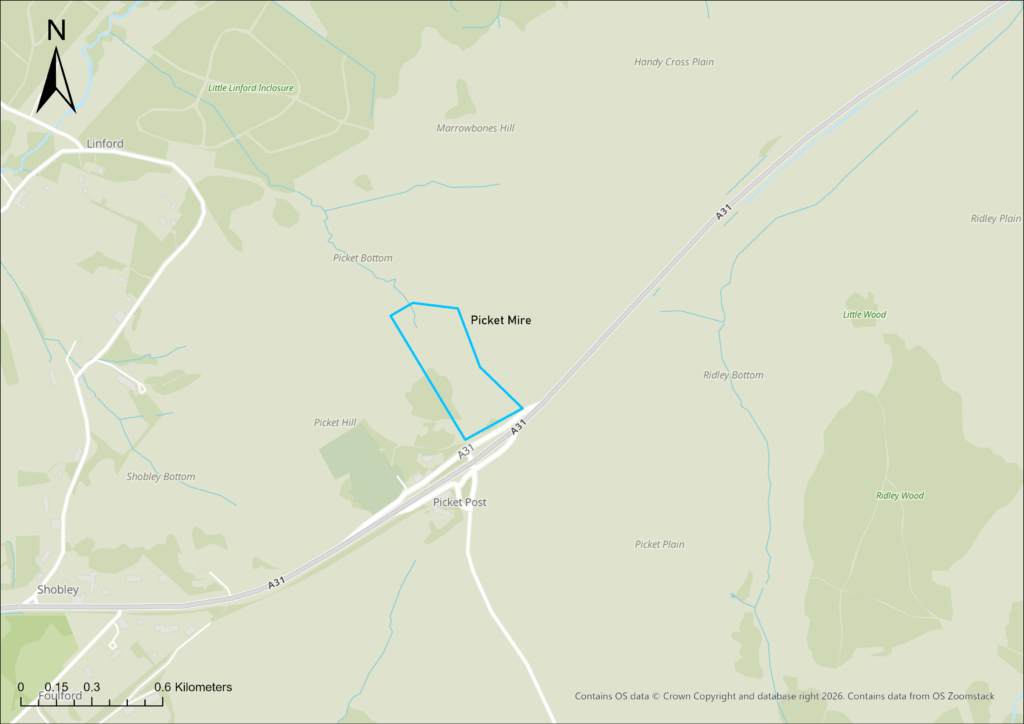
What were the issues?
Higher up in the Picket Bottom Mire catchment a section of the mire was becoming deeply incised as a result of a ditch and bank.
The ditch was focusing the flow of water and causing erosion which was eroding and damaging the mire habitat.
What's being done
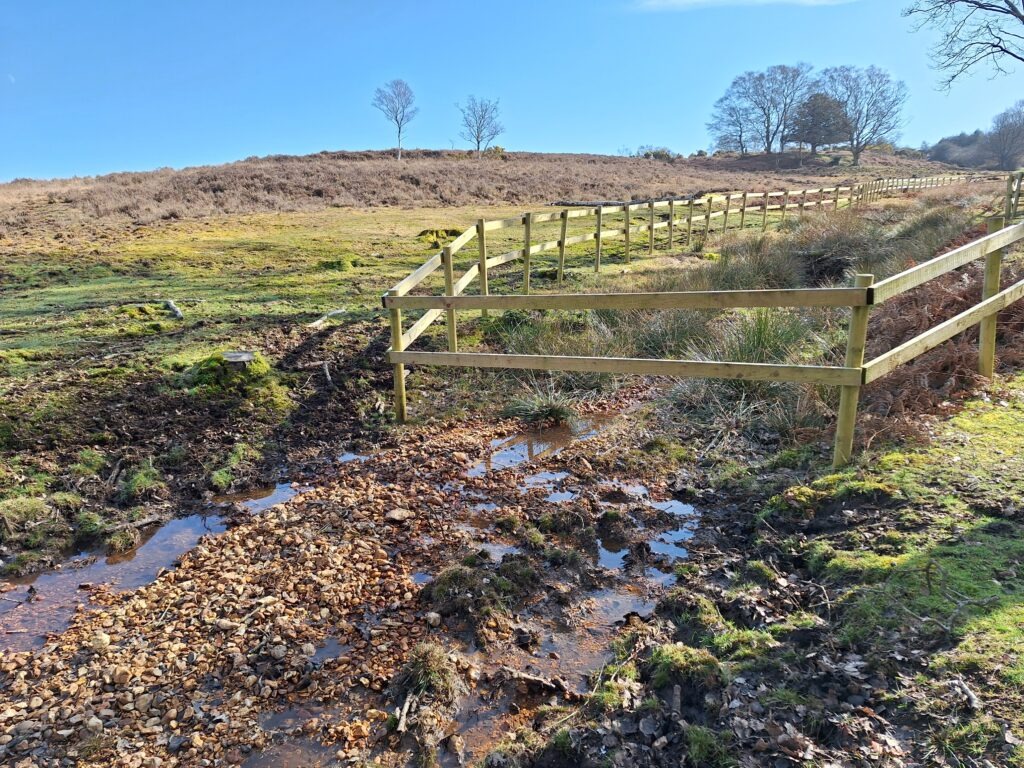
In 2023 and 2025, Forestry England undertook restoration work to restore the deeply incised channel higher up in the Picket Bottom Mire catchment.
The work involved infilling the eroded sections and incised channel to better connect the channel to its floodplain, helping to prevent further erosion of the mire habitat.
A temporary fence was erected around the restoration work to protect it from being poached by livestock whilst the habitat stabilises.
The restoration work resulted in creating better floodplain connectivity, allowing water to be retained in the mire for longer.
This will help prevent further erosion and protect the mire habitat. Forestry England will continue to monitor the site and survey how the habitat recovers.
'Naturally functioning systems are more resilient to coping with the climate breakdown we are experiencing which is why it is so important to restore wetland habitats like Picket Mire so they can better cope with this change'
Lorna Bailey-Towler, habitat restoration officer at Forestry England